
Calf Feeding Equipment Wholesale: How Distributors Choose Products and Suppliers
Most distributors don't start with calf feeding. It usually comes later, once water bowls, ear tags and footbath cups are already moving and customers begin asking whether you carry anything for calves.
The mistake at that point is quoting on bottles alone. Then a customer asks for feeding buckets, or wants teats sold as a separate line, and it turns out you have one supplier, one specification, and a second factory to find.
What follows runs in the order a purchase actually happens: what the line contains, how to hold quality across batches, then product mix, customization, and supplier checks.
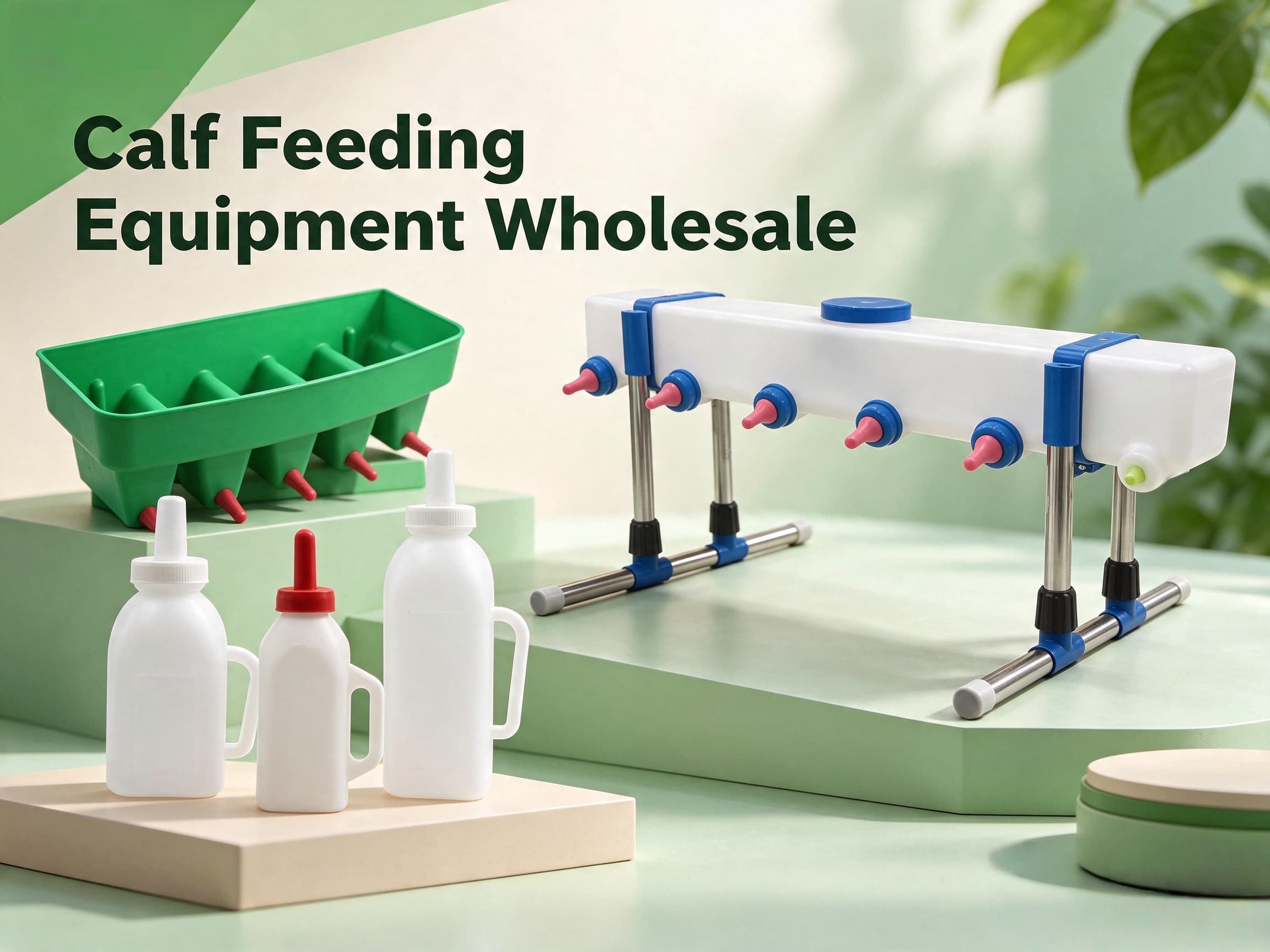
1. The line is basically three things
Bottles, feeding buckets, and teats. The first two are the main items. The third is treated as an accessory by most buyers, and it's where most problems start.
Calf milk bottles.
Capacity varies a lot, and which sizes you stock depends on habits in your market, not just on the size list. Beyond capacity, look at neck diameter, whether the body carries volume marks, and whether the bottle stands up when full. These read like small details. In practice, they decide whether a customer comes back for a refill.
Calf feeding buckets.
Some come with a teat, some without, some mount on a pen rail. Ask three things before quoting: wall thickness, how the bracket is built, and whether fittings ship with the bucket. A thin wall distorts once the bucket is filled and carried, and the customer sees it on first use.
Teats and accessories.
Teats deserve their own conversation. Diameter, flow rate, and hardness differ between makers, so a teat from one factory may not seat properly on another factory's bottle neck, and you get leaks or a loose fit. If you buy from two sources, fit the samples together before you order. Teats also wear out faster than bottles, so steady supply on the accessory side decides how often the customer returns.
2. Passing the sample is the easy part
A good sample says little about the second or fifth production run. Batch problems usually come from worn tooling or a change of raw material batch, and suppliers don't always mention either one.
What you can actually do:
- Keep a sealed reference sample before production. Both sides hold one, and note it on the purchase order.
- Put the key specs in the contract instead of writing "as per sample". For teats, state material and hardness.
- Inspect before shipment, and focus on teat and neck fit. That is where most returns come from.
- Confirm packaging too: carton size, units per carton, shipping marks. Change the packaging and your share of the freight changes with it.
If a supplier won't hold a reference sample or put these points in writing, that tells you something on its own.
3. Product mix: don't launch with twenty SKUs
More SKUs isn't automatically better. It depends on who buys from you.
If your customers are retail and farm supply shops, they sell in singles. You need the full size range and packaging that works on a shelf. If you sell direct to farms, buyers order in batches and care more about keeping durable items and consumables separate. Bottles and buckets last. Teats don't. The two reorder at completely different rhythms.
A workable starting set: two or three bottle sizes, one bucket with a teat and one without, and teats listed as a standing accessory. Run it for a round, see which sizes move, then add. Filling the range on day one ties up stock and cash.
If you already carry cattle watering equipment, ear tags or footbath cups, put the calf line in the same catalogue so a buyer can cover it in one enquiry. The mix still has to match what your market sells. Another distributor's catalogue won't necessarily fit yours.
4. Confirm these before a bulk order or custom run
MOQ and pricing.
Minimums vary widely by product and by customization. State your expected quantity when you ask, and get the price quoted against that volume. A reference price on its own is hard to build a margin on.
Specifications.
Size, material, colour, accessory list, product photos. Confirm each one. Colour is the easiest place for things to blur, so ask for a physical swatch or a photo of a finished unit.
Packaging and freight.
Carton size, units per carton, and how many units load into a container decide the freight cost per piece. Settle this early, or the quote won't hold.
OEM and ODM.
Ask what the supplier can actually do. Logo printing, colour and packaging customization usually follow the packaging MOQ: change the packaging and the minimum moves up with it. Structural changes need tooling, and not every factory will take them on.
For a private label, packaging and marking are the easiest place to start.
5. How to judge a supplier
Comparing quotes alone rarely saves money. A low-price supplier often has a narrow line, so the second category you need still sends you looking for another factory.
Questions that produce useful answers:
- Can they cover the whole calf line, accessories included, from one place?
- Can they provide retained batch samples and inspection records?
- How long is the replenishment lead time? A stockout on teats is enough for a customer to switch.
- How far does customization go: packaging only, or colour and structure as well?
- How fast do they answer? A spec question that takes two days to get an answer won't get faster once orders are running.
One trade-off is worth saying plainly: a supplier who can cover everything usually won't be the cheapest per unit, and the cheapest per unit usually has the narrowest range. Decide whether you want to save on unit cost or on coordination and follow-up. With long-term customers, the second usually pays better.
6. Sourcing calf feeding equipment from China
For importers and distributors, steady supply and a wide enough range matter more than a single quote.
Muduoduo supplies livestock and poultry equipment as a one-stop range, covering cattle and sheep equipment, poultry equipment, veterinary instruments and animal identification products. The calf feeding line includes bottles, feeding buckets and matching teats.
If you're sourcing from China or adding calf feeding to an existing range, send the categories, specifications, and expected quantities. We'll start from your market and come back with a catalogue and pricing.


