
Livestock Animal Ear Tags: How to Choose & Install (2026 Guide)
Many livestock farmers overlook how critical proper animal ear tags are for daily farm management, animal tracking, and legal compliance. Poor tag selection or incorrect installation often causes tag loss, ear injury, unreadable numbers, and failed farm inspection. Choosing waterproof UV resistant animal ear tags greatly reduces replacement frequency. This complete guide explains what animal ear tags are, how to pick the best type for different livestock, and how to install and maintain tags for long-term stable identification.
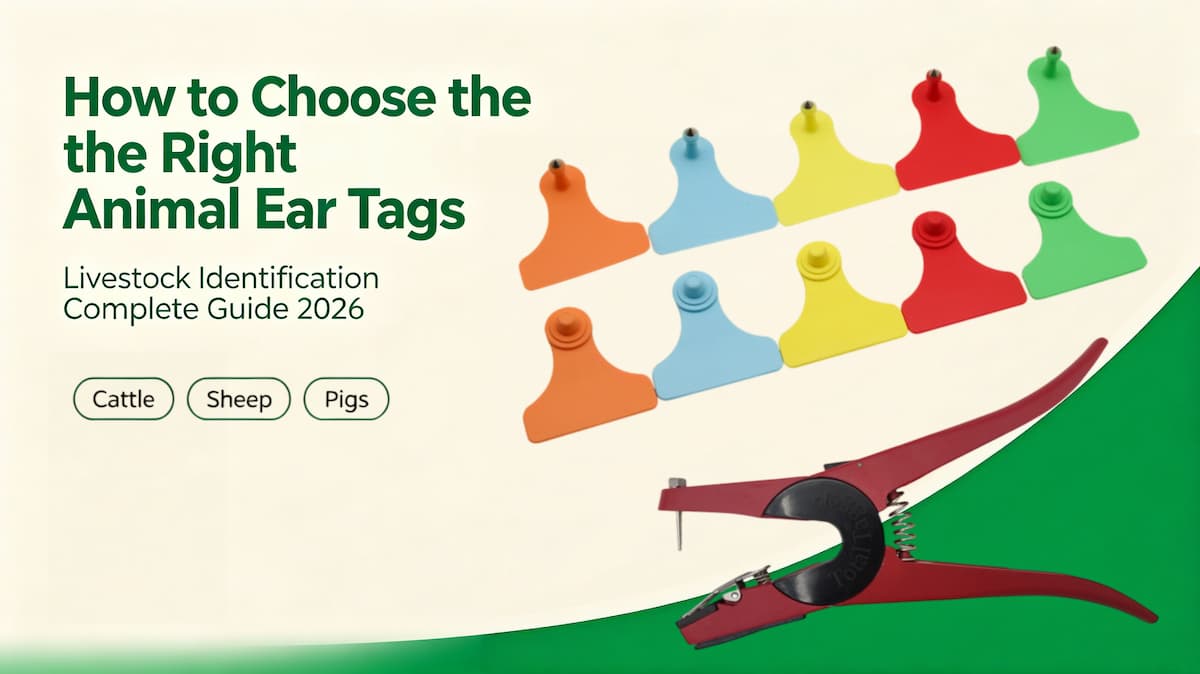
What Are Animal Ear Tags and Why Do Farms Need Them
Animal ear tags are durable identification accessories made of food-grade plastic, TPU, or special metal materials, widely used for cattle, sheep, pigs, goats, and other poultry and livestock. Each tag carries a unique number, QR code, or RFID chip, serving as the exclusive identity certificate for each animal on the farm.
Modern large and medium-sized farms rely entirely on ear tags to achieve individual animal tracking, growth record tracking, disease traceability, and standardized breeding management. Official livestock sales, transportation, and quarantine also require compliant ear tag identification to avoid fines and delivery delays. Paired with livestock farming equipment, standardized ear tag management builds a complete intelligent breeding system for modern farms.
Common Types of Animal Ear Tags (How to Choose by Scenario)
Different breeding scales and animal types require different ear tag styles. Most farmers choose wrongly by only focusing on low price, resulting in frequent replacement and higher long-term costs. Understanding the difference between laser engraved ear tags vs printed ear tags helps farmers make cost-effective long-term decisions and select durable livestock ear tags for outdoor farming.
1. Ordinary printed plastic ear tags
Suitable for small farms and short-term breeding cycles. The surface is printed with fixed numbers or simple QR codes, low cost, easy to use. However, they are not wear-resistant enough for long-term grazing and may fade after long-term sun exposure and rain erosion.
2. Laser engraved TPU ear tags
This is the most popular type for medium and large farms. Laser engraving ensures numbers and patterns never fade. The flexible TPU material prevents animal ear cutting and cracking, effectively reducing tag loss rate. It adapts to daily grazing, washing, and long outdoor exposure.
3. RFID electronic ear tags
RFID animal ear tags support 134.2kHz FDX-B international standard identification, compliant with ISO 11784 and ISO 11785 industry norms. They can store animal birth date, vaccination records, feeding records, and health data. Suitable for intelligent farms that require automatic data collection and precise breeding management, perfectly matching smart livestock identification systems for full-cycle farm monitoring.
Key Factors to Consider When Selecting Livestock Ear Tags
1. Animal size and ear thickness
Cattle need larger and thicker ear tags to avoid tearing during activity. Sheep, goats, and piglets require lightweight and soft tags to prevent ear damage and ensure comfortable wearing.
2. Anti-drop and anti-tamper performance
Qualified farm ear tags adopt a one-time snap-lock structure. After installation, they cannot be removed without damage, effectively preventing artificial replacement and ensuring the authenticity of animal identification information.
3. Weather and corrosion resistance
Livestock lives outdoors for a long time. High-quality ear tags resist ultraviolet aging, rainwater corrosion, and high and low temperature changes, maintaining clear identification information throughout the entire breeding cycle.
Standard Ear Tag Installation Steps and Placement Tips
Even the best animal ear tags will fail if installed incorrectly. Improper position easily causes inflammation, bleeding, or tag falling off.
Choose the middle third of the animal ear, insert the tag between the two ear cartilage ribs, and avoid blood vessels and ear edges. Align the professional ear tag applicator vertically and press firmly at one time to ensure tight locking and no shaking. After installation, check for extrusion deformation and wound bleeding to reduce infection risks. Using a qualified livestock ear tag applicator can greatly improve installation efficiency and tag stability.
Common Ear Tag Problems and Solutions
Many farmers search why do livestock ear tags fall off easily and struggle with unstable tagging effects. Below are the most frequent issues and practical fixes for daily farm maintenance.
1. Ear tag falling off easily
Mostly caused by incorrect installation position or using unqualified thin tags. Replace with thickened flexible TPU tags and reinstall at the standard middle ear position.
2. Fuzzy and unrecognizable numbers
Printed tags are prone to fading. It is recommended to choose laser engraved ear tags with permanent clear markings.
3. Animal ear redness and inflammation
Caused by rough operation or unsmooth tag edges. Use polished smooth ear tags and disinfect before installation.
Farm Compliance and Industry Standards
Formal livestock ear tags meet international animal identification standards and support farm quarantine, animal product traceability, and cross-regional transportation inspection. Using ISO compliant livestock identification tags helps farms achieve standardized breeding, improve product credibility, and meet global livestock product export requirements.
Final Thoughts
Animal ear tags are not just simple identification tools; they are the foundation of modern standardized livestock farming. Choosing durable, standard, and suitable ear tags can greatly reduce farm management costs, avoid identification confusion, and ensure traceable and safe breeding output. For long-term farm operation, high-quality laser engraved and RFID ear tags are always the most cost-effective choice.


